Aligner refinements in the UK: what ‘included’ should mean
Yes, extra trays may be included, but only if your written quote says so. Aligner refinements in the UK follow different package rules. “Included” can mean one round, several rounds, or treatment completed within a stated time window. Do not assume it from the headline price.

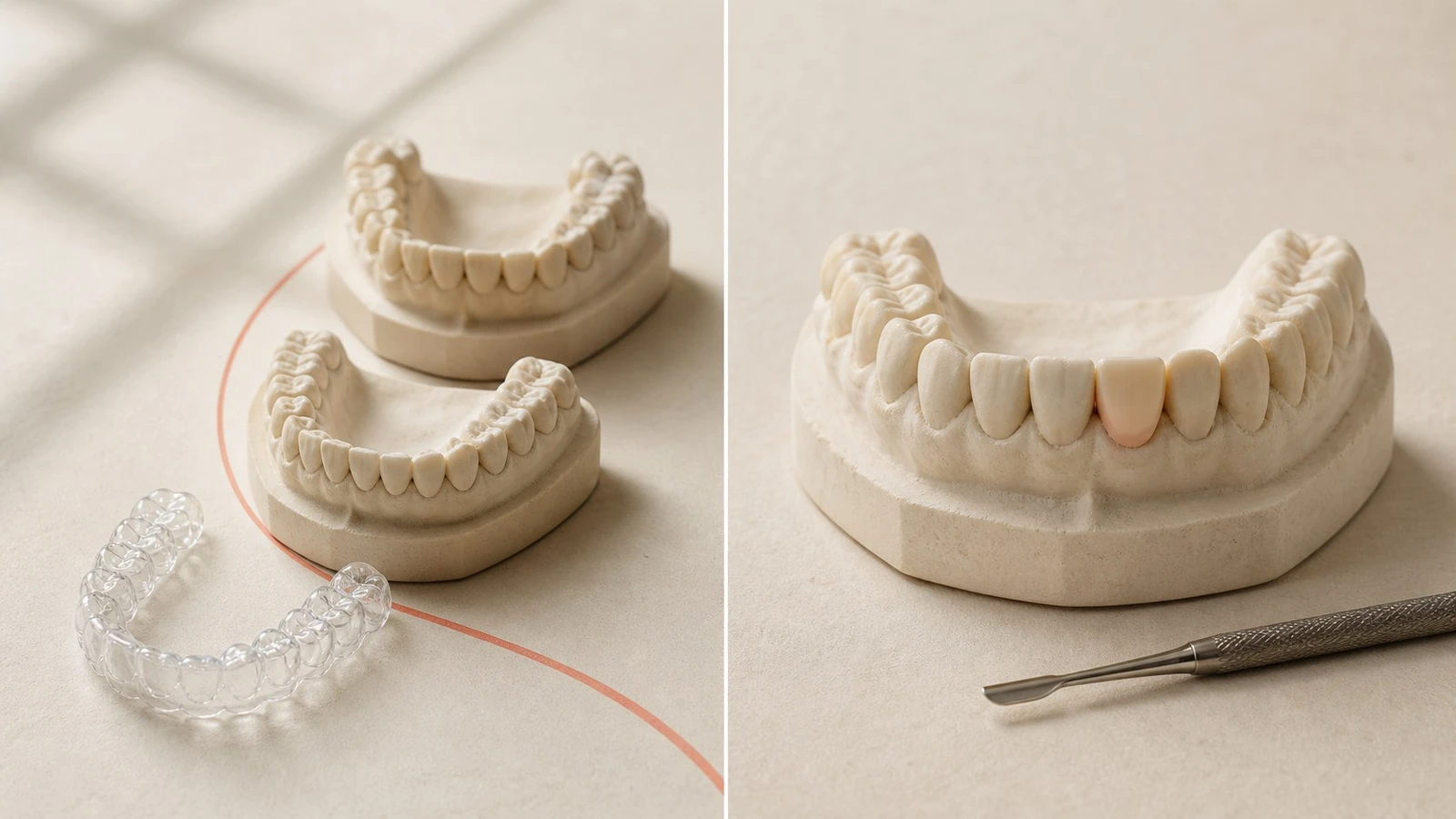
A refinement is a further sequence of custom trays made when some teeth have not moved exactly as the original digital plan predicted, or when the clinical team decides that small finishing movements are appropriate. This does not automatically mean treatment has failed. Teeth respond differently, and the next step normally depends on a clinical review rather than on the number printed on your last initial tray.
That is why “20 aligners” tells you less about financial protection than the full treatment terms. Your quote should say whether new scans, the revised plan, extra trays and review appointments are covered, how many refinement rounds are allowed, and when that allowance expires. It should also explain what happens if another round is recommended after the limit or deadline.
There is another important distinction. An aligner manufacturer may allow a provider to order additional trays under a particular product package. That allowance is part of the commercial arrangement between manufacturer and provider. It is not, by itself, a promise that every associated cost will be included in the price charged to you.
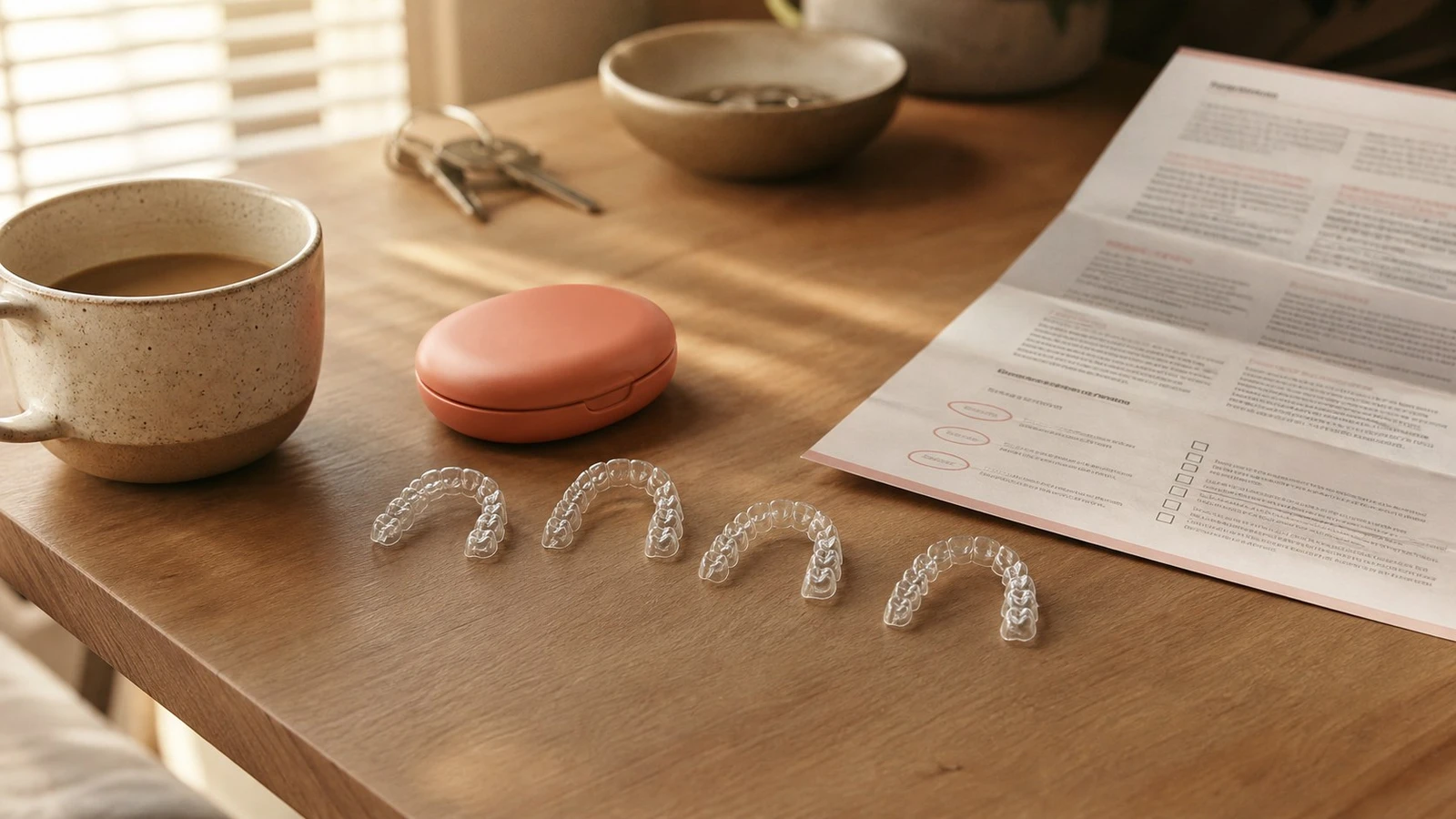
The GDC’s standards on communicating with patients say patients should receive a written treatment plan with a realistic indication of cost, and written updates if the plan changes. Before comparing quotes, look for that detail in writing. If “refinements included” appears without limits, dates or linked fees, ask for those terms to be added before you decide.
Extra trays in your quote: the five checks that matter
A quote that says “refinements included” answers one question. It does not tell you how many rounds are covered, whether scans cost extra or when that cover expires. Ask for the detail before comparing totals.
Use the written treatment plan as your reference. These five checks turn a vague inclusion into something you can compare.
| Quote item | What to get in writing | Why it affects the final cost |
|---|---|---|
| Refinement allowance | Number of rounds, any tray cap, and confirmation that a further set depends on clinical assessment. | A limited package may create an extra fee once its allowance is used. |
| Time window | The start date, expiry date, and what happens if treatment pauses or runs longer than expected. | “Unlimited” may still apply only during a fixed period. |
| Rescans and revised planning | Whether updated scans, photographs, a revised simulation and laboratory planning are included. | Planning charges can sit outside the price of the trays. |
| Assessment and reviews | Whether the refinement assessment, progress reviews, necessary visits and attachment changes are covered. | Clinical time may be charged separately from manufacturing. |
| Retainers and remakes | Retainer type and quantity, when they are made, and whether a new set is covered after further movement. | A retainer made for an earlier tooth position may no longer fit after refinement. |
One current UK package includes up to two refinements, charges for a third or later refinement, and prices removable and fixed retainers separately. That is one provider’s wording, not a universal package rule. It shows why “refinements included” needs a number and a deadline beside it.

The word “unlimited” needs the same scrutiny. It may refer to laboratory trays within an active case, not unlimited clinical time or an open promise. Ask whether the refinement rescan cost, revised plan and review appointments remain included throughout the stated window.
Keep three categories separate. A refinement is a newly planned sequence intended to continue an agreed treatment goal after clinical review. A lost tray replacement usually recreates a particular stage and may carry its own fee. A new treatment goal, such as movement outside the agreed scope, could require a fresh plan or new case rather than count as a refinement.
Before signing, ask the provider to record all five answers in the quote. Also ask who makes the clinical decision, what evidence they review and how any change will be priced. Clear wording cannot predict exactly how teeth will move, but it can establish who pays for scans, reviews and retainers if the planned route changes.
When teeth do not follow the digital plan exactly
A digital treatment plan is a modelled route, not a promise that every tooth will arrive on schedule. It predicts how small forces should move teeth through bone and surrounding tissues. Those tissues are living, so responses can differ between people and teeth. Wear time, attachment fit and movement complexity can also affect tracking.
The British Orthodontic Society’s clear-aligner guidance explains that proper assessment, diagnosis and treatment planning are essential, while some cases may require additional techniques. That context matters when a tray sequence ends or a tooth no longer matches its planned position.

At a review, the treating clinical team may assess aligner fit, how the teeth meet when the person bites and whether planned movements have occurred. Updated scans, photographs or other records may then be needed. If further movement is clinically appropriate, the team can create a revised digital plan and prescribe another tray sequence. This is a refinement. Its timing varies because next steps depend on the current tooth positions and clinical assessment.
A replacement tray is different. It reproduces a lost or damaged tray from the existing sequence rather than changing the plan. A retainer is different again. It is intended to hold the accepted final position after active movement, not to complete movement left in the original plan.
These distinctions matter when comparing quotes before you agree to treatment. Ask whether updated records, revised planning, further trays and added reviews are included, and what happens if retainers already ordered need remaking. Also ask who decides whether a refinement is appropriate and whether requests must fall within a stated window. The first tray count cannot answer those questions. The treating clinical team decides the appropriate next step for each case.
Compare the written plan, then discuss your own case
Two quotes can show the same headline price while offering different protection if treatment needs another stage. One may cover scans, reviews and several clinically approved refinement rounds. Another may stop after one round, exclude the rescan, or treat retainers as a separate purchase. Compare what happens when the plan changes, not just the starting total.
A current UK clear aligner consent form shows how specific the paperwork can be. It separates included appointments and removable retainers from lost-aligner fees, further planning charges and refinements beyond two included rounds. Those are one provider’s terms, not a market rule. The lesson is the detail.
At Smila, the £200 3D scan and personalised treatment plan belongs to you whether or not you proceed. Use it to ask how a possible refinement pathway applies to your plan, including any limit, deadline, scan, review or extra fee. Treatment is remotely supervised by UK GDC-registered dentists, and retainers are included in the treatment price.
Those inclusions do not mean refinements are automatically unlimited or covered in every situation. Your individual plan should make the position clear. It should also identify who reviews progress and how you can raise a concern if a tray stops fitting as expected.
Start with a free eligibility assessment if you want to understand whether clear aligners may suit your case. Smila declines roughly one in ten enquiries when aligners are not considered the right option, because a transparent quote starts with an honest view of suitability.

This article provides general information, not individual medical advice. If you are already in treatment and have concerns about tracking, fit or pain, contact the dental professional responsible for your care.