Tooth Filing for Aligners: What an IPR Marker Really Means
If you are researching tooth filing for aligners after spotting “IPR” on a treatment plan, it is understandable to feel uneasy. The wording can sound much more dramatic than the clinical step being proposed. An IPR marker is not an instruction that you must accept. It identifies something to discuss before deciding whether to consent.

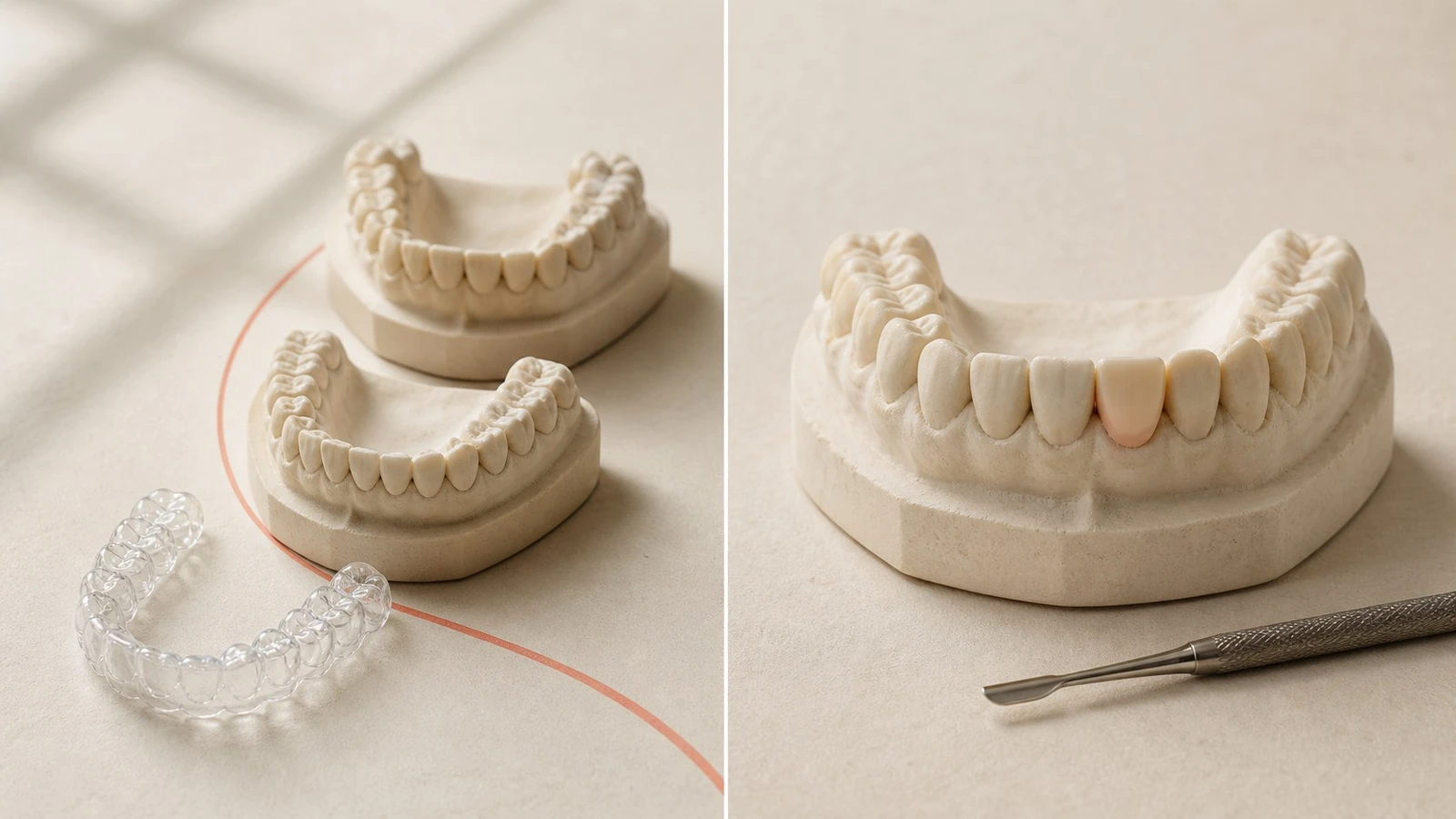
IPR stands for interproximal reduction. In plain English, it means removing a small, planned amount of enamel from the sides of selected teeth, where neighbouring teeth meet. The aim is to create measured space so teeth can move into their planned positions. The amount and location should be specified by the clinician responsible for the plan.
This is different from cosmetic edge reshaping. Cosmetic reshaping changes the visible outline or length of a tooth, usually at its biting edge. IPR is carried out between teeth to make room, often when teeth are crowded. It does not mean filing down the whole tooth, and its appearance on a digital plan does not mean it is automatically right for you.
IPR is not part of every aligner case. The British Orthodontic Society patient leaflet explains that small amounts of space may be created by filing the sides of some teeth, while most cases need neither filing nor extraction.
Treat the marker as the start of a consent conversation. Ask why space is needed, which teeth are involved, how much enamel is proposed, what the alternatives are, and what benefits and risks apply. Online information cannot examine your teeth, gums, bite or enamel, so it cannot confirm whether IPR is suitable for you. That requires a personalised assessment and a plan you understand before agreeing.
When Tooth Filing With Aligners May Create Space
Clear aligners can move teeth only where there is room for them to go. If the front teeth overlap or sit tightly together, a clear aligner treatment plan may need to create a small amount of space before guiding them into a better position.
People asking about filing during aligner treatment are usually referring to interproximal reduction. This is a planned form of enamel reduction in orthodontics. A clinician removes a carefully measured amount from the surfaces where neighbouring teeth touch. The aim is to make modest space between selected teeth, not to shorten the tooth or noticeably change the smile line.

IPR is only one possible approach. Depending on the bite, the starting position and shape of the teeth, gum and dental health, and the movements required, a plan might instead use staged tooth movement, expansion within safe limits, or another orthodontic method. The right choice depends on an examination and clinical judgement, not the scan alone.
| Question | Planned IPR for aligners | Cosmetic tooth reshaping |
|---|---|---|
| Purpose | Creates measured space so teeth can move as planned | Alters tooth appearance, symmetry or proportions |
| Location | Between neighbouring teeth at selected contact points | Usually visible edges or outer contours |
| Decision | Based on bite, crowding, tooth shape, oral health and movement | Based on an aesthetic goal and clinical suitability |
| Consent | Covers sites, measurements, timing, alternatives and relevant risks | Covers the visual change, limits, alternatives and relevant risks |
Cosmetic reshaping is therefore different from IPR. It may smooth an uneven edge or adjust a visible contour, whereas interproximal reduction for clear aligners is intended to support tooth movement. The same instrument might sometimes be described casually as “filing”, but purpose, location and measurement matter. If tooth filing is listed on a quotation, ask which procedure is actually proposed.
A digital setup may show suggested IPR locations and amounts, but it is a planning aid, not an instruction that must be followed unchanged. ClearCorrect’s IPR best practice guidance states that its recommendations are not absolute and that IPR remains at the clinician’s discretion. It also calls for the procedure to be explained, the locations and measurements identified, and consent obtained before treatment.
That distinction is reassuring but important: “computer planned” does not equal individually confirmed. Before agreeing, the clinician should check that the proposed space is needed, that the teeth and gums are clinically suitable, and that the timing still makes sense. No website or remote description can confirm this for an individual. A proper assessment turns a proposed digital step into a personalised clinical decision.
Before You Agree: Questions That Make IPR Consent Meaningful
Seeing IPR on a clear aligner treatment plan is not informed consent. Meaningful consent means understanding what is proposed, why it is needed and what reasonable alternatives exist.
IPR removes a planned, measured amount of enamel where teeth touch. The word “filing” may sound alarming, but you still need a clear explanation before agreeing.

Ask your treating clinician:
- How much enamel, and where? Request the amount at each contact point and the teeth involved.
- Why is space needed in my case? Ask how IPR supports the intended movement or bite goal.
- What are the benefits and material risks? These should be explained in terms relevant to you, including uncertainty.
- What are the alternatives? Ask about different movement strategies, other appliances, extraction where appropriate, or no treatment, and why.
- What happens if I decline? Find out whether the plan could change, results may be limited, or treatment should not proceed.
- Could the amount or location change later? Ask when any revision would be explained and consent sought again.
- Will it affect the price? Confirm the total cost and any charges linked to changes.
- How will it be measured and recorded? Ask what checks are used and whether completed IPR appears in your clinical records.
The GDC standard on valid consent says discussions should cover options, risks, potential benefits and cost, while checking your understanding. Consent is ongoing, not a signature or a one-off tick box. You can ask for plain English, take time to consider the information and raise questions later.
Whether interproximal reduction is suitable cannot be decided from photos or a generic article. It needs a personalised clinical assessment. A Smila assessment can establish whether aligners may be appropriate and what an individual plan may involve.
Read the Plan, Then Choose the Right Next Step
IPR can be a way to create room for teeth to move. A clinician removes a small, measured amount of enamel between teeth. This differs from cosmetic reshaping, which alters a tooth’s outline for appearance. IPR should be shown in your clear aligner treatment plan, not sprung on you.
A polished simulation is not enough reason to consent. It shows a destination. It does not explain why IPR is appropriate for your mouth, how much enamel is proposed or whether another approach could work.
Before agreeing, ask the team:
- Which teeth would have IPR, and how much is planned?
- What problem is it intended to solve?
- What alternatives are available, including no treatment?
- What are the material risks, limitations and likely effect of declining?
- Who will carry it out, and when will consent be requested?
You should receive answers you understand and time to consider them. Suitability for IPR with clear aligners cannot be confirmed from photographs, a simulation or an article alone. It can depend on enamel condition, crowding, tooth shape, gum health and how your bite fits together.
Smila offers adults a free online assessment as a first step. If the case looks suitable, you can choose a £200 3D scan and personalised plan, which you keep whether or not you proceed. Treatment is supervised remotely by UK GDC-registered dentists, and roughly one in ten enquiries is declined when aligners are not considered a good fit.

If you want a clearer view of what your plan involves, start with Smila’s free assessment and bring your questions with you. This article provides general information only and is not medical advice or a recommendation.