What clear aligners cost in the UK in 2026
In 2026, the cost of clear aligners in the UK usually runs to several thousand pounds and covers more than a set of plastic trays. The figure depends on the movement planned, whether one or both arches are treated, the number of aligners and what the package includes. More complex cases usually need more planning, trays and clinical input. A starting price is useful, but rarely tells you whether quotes are comparable.
Invisalign is a brand of clear aligner, not a separate treatment. Other systems use the same broad approach: a personalised sequence of removable trays. The more useful questions are who assesses suitability, plans movement, monitors progress and responds if treatment does not track as expected.

Compare each quote across three areas:
- Total cost: Check whether assessment, scans, planning, aligners, monitoring, refinements and retainers are covered. Ask what can cost extra, such as replacement trays.
- Convenience: Count expected in-person appointments, understand remote reviews and ask how quickly clinical support is available.
- Clinical responsibility: Confirm that a UK GDC-registered dentist assesses suitability, remains responsible and can arrange further checks when needed.
The CMA guidance on choosing and paying for dental care is a useful reference for checking how prices and treatment options should be explained. Before agreeing, ask for a written treatment plan that separates what is included from possible additional charges.
A cheaper quote may represent good value for a suitable, straightforward case, or leave important parts outside the advertised price. A higher quote may include more appointments or services, but is not automatically better. Compare the complete pathway: total treatment cost, fit with everyday life and clinical responsibility. Suitability and final fees require an individual assessment. This is general information, not personal medical advice.
Compare clear aligner costs beyond the headline price
A clear aligner quote is only useful when you know what sits behind it. Two prices can look hundreds of pounds apart, then converge once scans, extra aligners, monitoring and retainers are counted. Suitability matters too. A low fee is poor value if the proposed pathway cannot safely handle the tooth movements required.
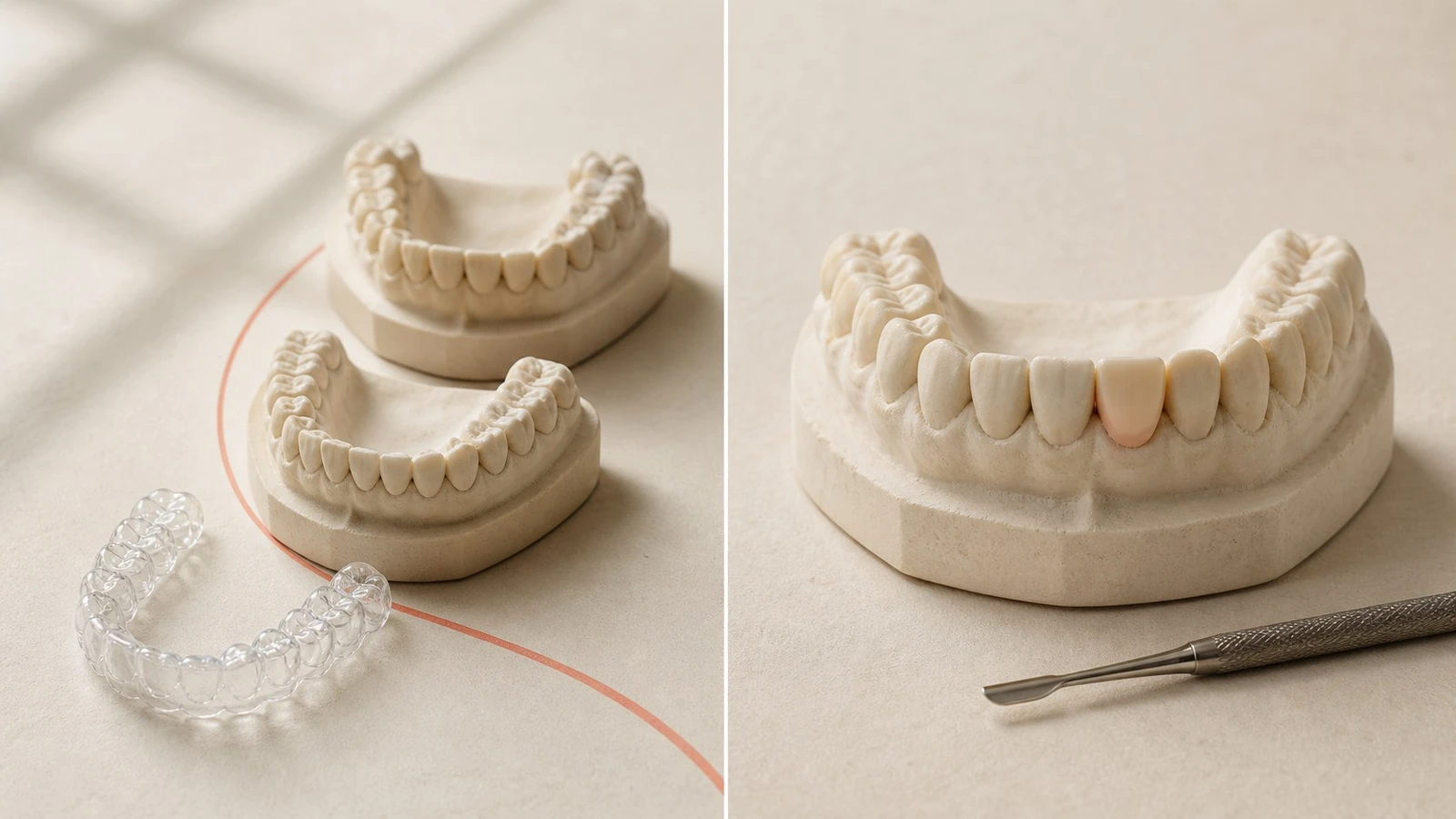
Start by comparing like with like. A 3D scan creates a digital model of your teeth, while a personalised treatment plan maps the proposed movements. It is a plan, not a promise of a particular result. Some cases also need attachments, small tooth-coloured shapes added to some teeth to help an aligner grip. Interproximal reduction means carefully removing a very small amount of enamel between selected teeth to create space.
| Quote item | Question to ask | Why it affects value |
|---|---|---|
| Assessment and scan | Who checks suitability, and is the 3D scan included? | Safe planning starts with appropriate assessment and accurate records. |
| Plan and aligners | Do I keep the plan, and are all planned trays included? | Limited packages may cover fewer movements or one arch only. |
| Clinical procedures | Are attachments and interproximal reduction included if required? | Necessary clinical work can otherwise become an extra charge. |
| Monitoring and refinements | How are progress checks handled, and how many refinement aligners are covered? | Teeth do not always track exactly as planned. |
| Retainers and aftercare | Which retainers and follow-up reviews are included? | Retainers help maintain tooth position after active treatment. |
| Finance | What are the deposit, term, interest and total repayable? | A small monthly figure can conceal a higher overall cost. |
Check what happens if an aligner is lost, damaged or stops fitting properly. Ask whether replacements cost extra, what counts as a refinement, and whether there is a deadline or limit on additional aligners. A useful written quote should make those boundaries clear before treatment starts.
Monthly instalments are not the same as the total repayable amount. Compare the deposit, number of payments, interest rate, fees and final total. A lower monthly payment spread over a longer term may cost more overall, even when it feels easier to fit into a budget.
Smila’s own package is one example, not a market norm. It offers a free initial consultation, followed by a £200 3D scan and personalised plan that the customer keeps whether or not they proceed. Treatment starts from £2,000 when aligners are considered suitable, and retainers are included. The final recommendation and price depend on the individual assessment.
Value also includes being told when aligners are not appropriate. Compare whether the provider can explain alternatives, who remains responsible for monitoring, and what support is available if the plan needs to change. That tells you more than ranking offers by their headline price alone.
Convenience still needs accountable clinical oversight
Convenience is not simply the number of appointments in a calendar. Traditional in-person care may suit people who value regular face-to-face reviews or need hands-on procedures. Supervised remote care can reduce travel and time away from work by using digital check-ins between any necessary visits. An unsupported mail order model may involve fewer journeys again, but the practical question is whether anyone clinically responsible is reviewing progress and available when something changes.
The GDC guidance for people considering remotely provided aligners recognises that remote orthodontic care can improve access and lower costs, while stressing that safety cannot be compromised. It says the dentist who prescribes aligners remains responsible for treatment. It also tells patients to understand why an in-person examination may or may not be needed and how to contact the treating dentist directly.

Before comparing convenience, ask:
- What assessment of my teeth, gums, bite, health history and any relevant X-rays is required?
- Who reviews each digital check-in, and how often?
- Can I contact the responsible UK dental professional directly?
- What happens if a tray does not fit, progress stalls or an in-person review becomes necessary?
Smila is an independent aligner brand, not a dental clinic. Its cases are remotely supervised by UK GDC-registered dentists and typically involve 0 to 2 in-person appointments. That model may reduce travel, but it does not remove the need for suitable assessment, monitoring and a clear escalation route.
Some cases need hands-on examination, more appointments, fixed braces or another treatment approach. That is not a failure of convenience. It is a sign that the care plan is being shaped around clinical need rather than a preset process. The useful comparison is therefore fewer unnecessary journeys with accountable care, not the smallest possible appointment count.
A practical value check before choosing treatment
Before comparing brands, turn every quote into the same set of answers. A trustworthy recommendation should show why a treatment model suits the person being assessed, not merely why its monthly figure looks attractive.
Use this checklist before committing:
- Is the total price written down, with included and excluded items clear?
- Does the assessment check oral health as well as tooth position?
- Who is clinically responsible, and can you contact the clinical team directly?
- How will progress be reviewed, and what happens if an aligner stops fitting as expected?
- Are refinements, replacement trays, retainers and aftercare included or separately charged?
- If finance is offered, what is the deposit and total repayable amount?
- What alternatives will be discussed if aligners are not appropriate?
The British Orthodontic Society’s clear aligner guidance explains why proper assessment and treatment planning matter. It also notes that retainers are needed after aligner treatment and that some complex cases may need additional techniques or fixed appliances. That is a useful reminder that a credible assessment must be able to produce a different recommendation, including no aligner treatment.
Two shortcuts are worth avoiding. The cheapest quote is not automatically the best value. Equally, a provider offering more appointments does not automatically provide better care. Look instead at whether the contact is clinically useful, whether responsibility is clear and whether the price covers the full planned journey.

Smila declines roughly one in ten enquiries when aligners are not considered suitable. Its free initial assessment can help explain possible next steps, but suitability and treatment details depend on an individual clinical review. This article provides general information, not personal dental advice. Results and treatment times vary.